
by Meteorologist Jeb Postle
With the days getting longer, school getting out, and warmer temperatures upon us, more people will be out and about enjoying the wonders of summer. At the same time, this is time of year when severe thunderstorms are more likely to be found across the area. When a thunderstorm rolls through, it is usually associated with heavy rain, gusty winds, occasional hail, and frequent cloud to ground lightning. The following are some precautions you take prior to and during a storm.
According to NOAA, an average of 51 deaths per year were caused by lightning strikes between 1984-2013. When it comes to lightning, there are several steps you can take to avoid being struck.
- When outside and seeing dark ominous clouds in the distance, make sure to check up on the latest weather report.
- When you hear thunder, go indoors. This is indication that lightning can strike at any time in your vicinity. One way to tell how far a lightning strike is from you is to count in seconds after seeing a flash of lightning to when you hear thunder. Sound can travel roughly 1 mile in 5 seconds (How Stuff Works, 2014).
- If outside in an open field with no shelter in sight, the best option is to get as close to the ground as possible, allowing you to not be the tallest item for lightning to strike in the vicinity.
- If swimming in a pool or on a boat in the middle of a lake, get out as soon as possible. Water is a good conductor of lightning.
- If outside near a car, it’s safer to go in the car.
- Don’t take shelter under trees.
- When inside a house or structure, avoid using water, stay away from the windows, and avoid the use of a phone during a storm. Also, another precaution might be to unplug your electronics due to a possible power surge from a power outage.
Flooding is another component associated with storms. It’s the number killer of storm related deaths in the United States. From 1984 to 2013, there has been an average of 85 deaths per year caused by flooding (NOAA 2014).
The following are some steps you can take when it comes to flooding.
- Be vigilant and alert if you live in a low-lying area prone to flooding.
- When you see water covering or flowing across a roadway, turn around and don’t drown.
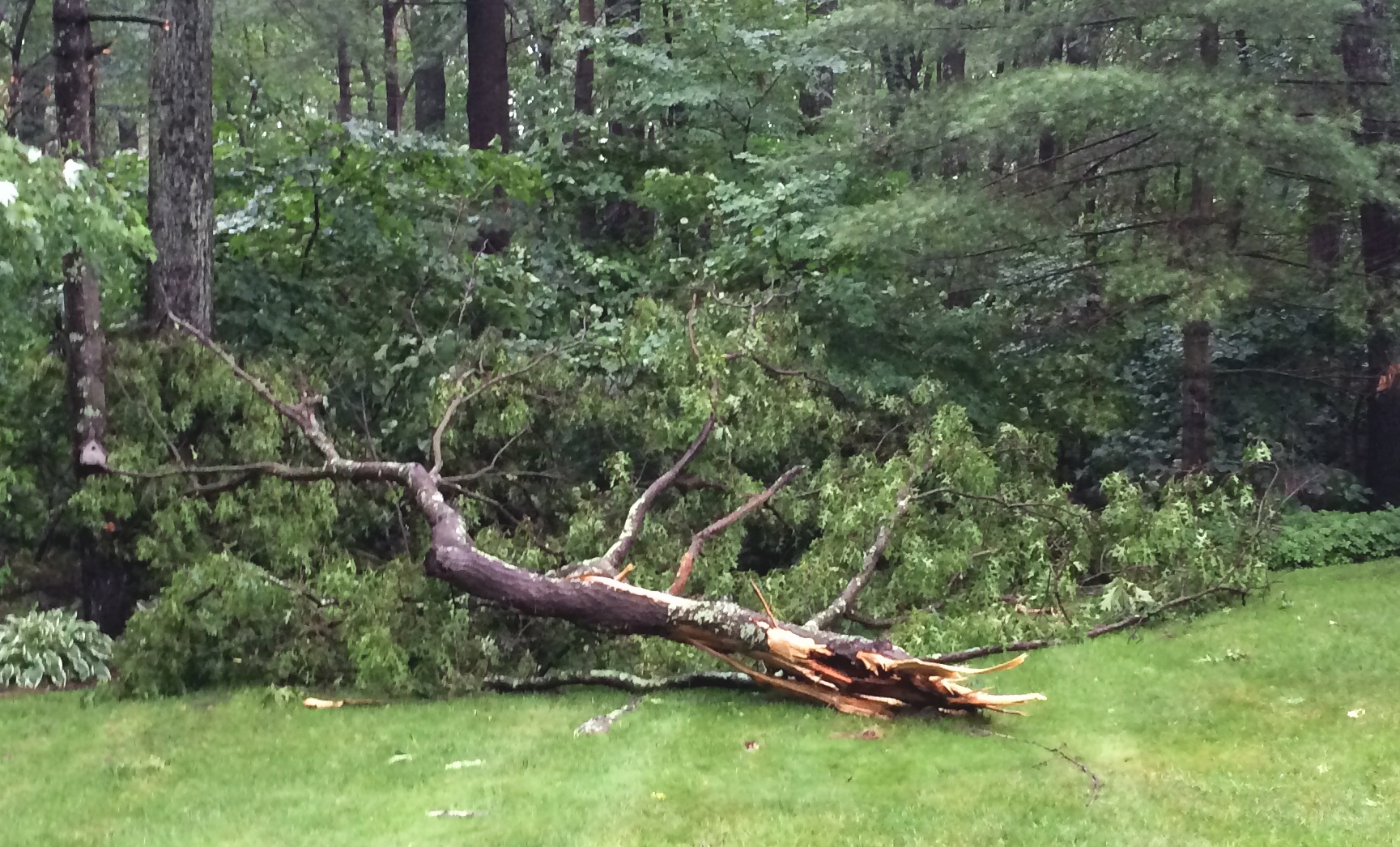
These are some of the basic precautions you can take when a severe thunderstorm rolls through the area. Some preparations you can take after a storm rolls through is to be ready for a possible power outage from downed trees and power lines. With a history of power outrages in South Grafton and Upton from storms, it’s a good to idea to have flashlights and candles ready. Also, having some canned foods and water is another good suggestion.
Sources:
Weather Fatalities: 2014: National Weather Service Office of Climate, Water, and Weather Services: 2014; http://www.nws.noaa.gov/om/hazstats.shtml
Can You Calculate How Far Away Lightning Struck BY How long It Takes For The Thunder To Arrive: 2014: How Stuff Works: 2014: http://science.howstuffworks.com/nature/climate-weather/storms/question182.htm

 UPTON DAILY