
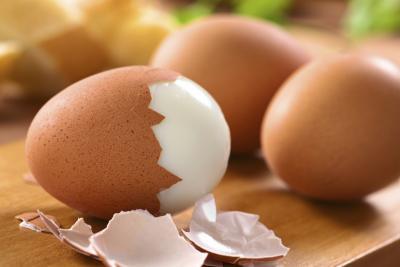
 Are you an egg-eater? I never was until a couple of years ago. My mother never cooked eggs for breakfast. In fact, I was a sugar-laden cereal eater. My favorite was Captain Crunch. One of the worst on the market for added sugar! My mother heard that the cholesterol in eggs was bad so out they went. Why she thought all the other garbage on our shelves was good, I don’t know! Back in the 70’s and 80’s lots of reports came out stating that too much cholesterol and saturated fat would clog your arteries and give you a heart attack. So all of a sudden, a farm fresh food that’s been around for thousands of years was not allowed on our plates.
Your body actually needs cholesterol. It is vital to many of the body’s most important compounds including the sex hormones and vitamin D. It is also an integral part of our cells membranes. The majority of cholesterol is actually made by our body by the liver. If you take in more from your diet, your body makes less, and vice versa. And without cholesterol, you would die.
Dietary cholesterol, like the kind in egg yolks, actually has very little impact on serum cholesterol (the kind your doctor measures). Also, because eggs contain more poly and mono unsaturated fat than saturated fat (61% poly and mono unsaturated to 39% saturated) the effect of eggs on heart disease can’t be predicted by only looking at their cholesterol content. While saturated fat does raise cholesterol, it raises both the good and the bad cholesterol.
According to Dr. Walter Willet, chairman of the department of nutrition at the Harvard School of Public Health and a professor of medicine at Harvard Medical School, “No research has ever shown that people who eat more eggs have more heart attacks than people who eat few eggs.”
Why are eggs so good for you? For starters, they are a perfect source of protein. Eggs contain all of the 9 essential amino acids (proteins our body need but can’t make itself). They are also loaded with vitamins and nutrients that help our brain, eyes and yes, your heart!
Eggs are one of the best sources of choline. Choline is essential for cardiovascular and brain function and for the health of our cell membranes and it’s all found in the yolk! Choline is an essential part of a phospholipid called phosphatidylcholine. Whithout adequate phosphatidylcholine both fat and cholesterol build up in the liver. Hmm…so people are afraid of the yolk because of the cholesterol but the choline in the egg actually prevents cholesterol from building up!
Eggs are also good for your eyes. They contain both lutein and zeaxanthin which help filter harmful high energy blue wavelengths of visible light from both sunlight and artificial light.
Other health properties to eggs are they contain vitamins B2 and B12 and also contain the cancer fighter selenium!
Ok, so now we know why we should be eating eggs, but how the heck do we buy them with all the different labels?
This can be confusing. There are regular store eggs, organic, free range, vegetarian fed, fortified fed, pastured eggs. What does it all mean? I’m here for you! Read on!
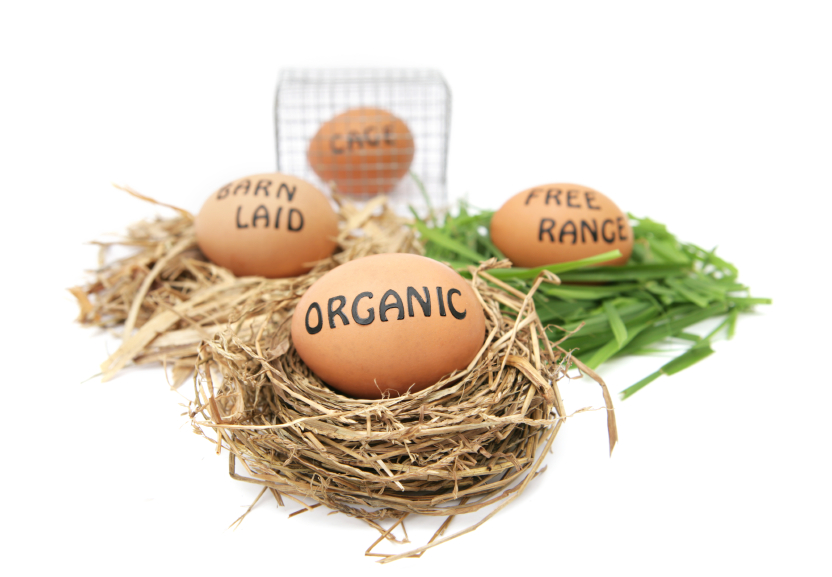 Free Range– these are also called “pasture-raised”. The hens are allowed to roam freely outdoors and forage for their natural diet of seeds, insects, worms and green plants. Legally they must be outdoors for at least 51% of the time.
Cage Free– This one is tricky. Most commercial egg farmers house hundreds to thousands of hens to produce eggs. Cage free means that they have access to the outdoors, but their “house” might be crowded. Cage free means that the hen is not housed in an individual cage. Also, there is no regulation stating how long the hen should have access to the outdoors or what it is actually fed. The hen could go out for a few minutes and come back in, only to be fed “hen feed” which is not their natural diet. It is usually genetically modified corn, soy, and cottonseed meal or worse, processed animal carcass or poultry litter. Outdoors can mean a 6×6 outdoor pen.
Fortified, vegetarian fed etc.- these eggs that have added omega-3’s to their feed are typically conventionally raised but the feed has been enhanced. As stated previously, hens are not naturally vegetarians. The feed they get with this labeling is usually grains made of corn, soy or canola. Unfortunately, it’s genetically modified.
Organic- these hens can technically live in cages but are usually cage free or free range to reduce the outbreak of disease. If a hen gets sick and has to be administered antibiotics, it will lose its organic label. The hens legally must have access to the outside if they do live in a cage. They can forage naturally, but also get organic feed free from GMO’s and animal byproducts.
The best eggs by far are fresh laid eggs. If any of you have your own chickens, you are very lucky to have access to such a great health food! If any of you have not yet tried a farm fresh egg, make sure to check out your local farmers market. They taste difference is unbelievable and the yolks are so yellow and creamy.
I hope that clears things up a bit about eggs. As always, check with your physician if you have any concerns about consuming eggs.
Source: mercola.com, blogher.com, PN, and my own information I carry in my head.
Christine Silvestri is Upton Daily’s health and fitness contributor.

 UPTON DAILY