

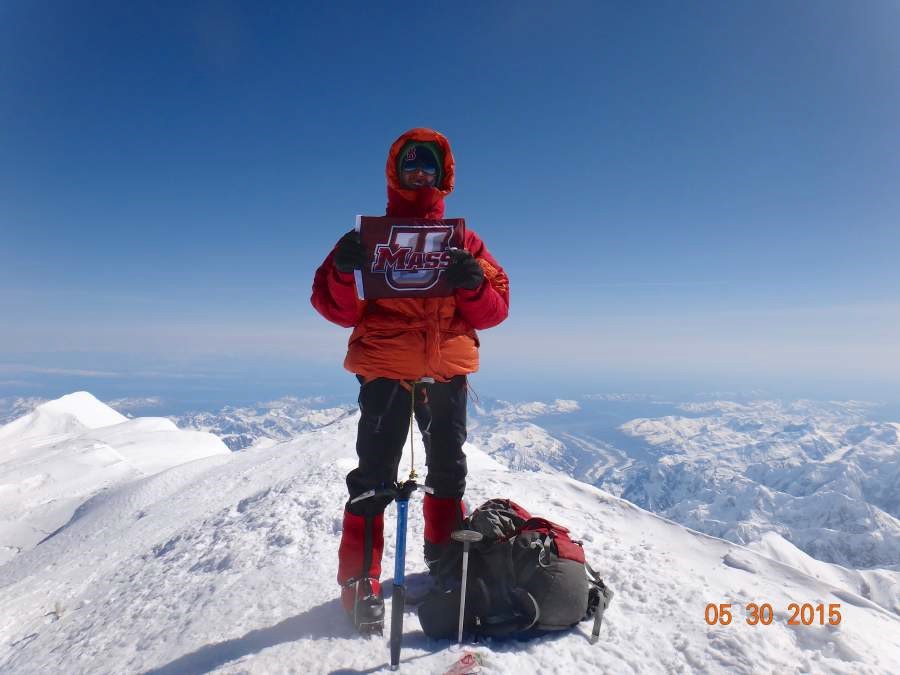
Jeff Rogers ’15 proudly displays his UMass flag at the top of North America
Alaska’s Mount McKinley, located within Denali National Park and
Preserve, is the highest mountain on the North American continent.
Measured from the 2,000-foot lowlands to its snowy summit at
20,320 feet, the mountain’s vertical relief of 18,000 feet is greater than that of Mount Everest or any of the Seven Summits. Due to the mountain’s far northern latitude of 63 degrees and lower barometric pressure, the peak has less oxygen at its summit than mountains of comparable height closer to the equator, climbing more like a
22,000-foot peak
More than two years ago, Jeff Rogers (Nipmuc Regional High School ’11, UMass Amherst ’15, Upton MA) and Alex Calder (Brookfield High School ’11, UMass Amherst ’15, Brookfield, CT) began envisioning a monumental ascent, choosing what the native Koyukon Athabascan people call Denali, meaning “The High One.” They honed their mountaineering skill set by completing New Hampshire’s Presidential Traverse in the cruelest of winter weather, sleeping in -30F temperatures, skiing Tuckerman’s Ravine at night by headlamps, running stadium stairs with 40 pound backpacks for endurance and longevity physical conditioning, studying Denali’s mountaineering statistics, speaking with some of the world’s greatest high altitude ski mountaineers, researching, selecting and maintaining gear and equipment, and having fun while doing it. A required 60-day pre-registration for all climbers attempting Mount McKinley ensued.
At age 22, the men insisted on climbing without the aid of guiding companies, certain they would get much more out of the experience if a guide did not hold their hand every step of the way. They precisely measured and weighed provisions, focusing on calorie count per gram, for a planned 30-day expedition. They studied glacier travel, became certified in Wilderness First Response, examined previous expedition reports and read about the pioneers who first climbed the mountain. About 1,200 people per year take on the challenge, most during the climbing season of May through July. On average, only 50% reach the summit.
Frigid temperatures, extreme winds, and zero visibility make ending up in a near-bottomless crevasse, dying of exposure, or being blown off the mountain a real possibility. Over 100 climbers have died on the mountain. Self-reliance is mandatory. Frostbite and altitude sickness enhance the danger. Mental fortitude, intense physical exertion, teamwork, and patient acclimatization are all necessary for this climb. As the pair were arriving for their mandatory pre-climb ranger meeting, word came that persistent high winds had prevented mountain rangers from recovering an experienced Argentinian climber, whose body was discovered at 17,200 feet May 10.
The team, self-proclaimed Gypsies of 14K, flew to the port city of Anchorage May 13, the meeting place for all expeditions in Alaska. A three-hour scenic train ride brought them to Talkeetna, followed by a 60-mile bush plane flight to Base Camp at 7200 feet on the Southeast Fork of the Kahiltna Glacier Saturday, May 16. With particularly stunning views from the air, the immense peaks, gorges, lakes and rivers stand out from the complex terrain between Mount Foraker and Mount Hunter. Looking ahead, the adventurers could see McKinley heaving its monstrous bulk up over the horizon. Nothing compares to the extraordinary base-to-summit vertical gain and the immense size of Denali, springing up nearly four miles from the surrounding countryside, and encompassing over 35 squares miles of terrain above 7000 feet.
The stay at Base Camp, a cluster of several dozen tents full of arriving fresh faces, and those battle-worn and sunburned wishing to depart, is brief before heading onto Denali. The expedition via the West Buttress begins with a particularly tedious navigation through the Kahiltna Glacier, where crevasse falls and avalanche danger loom. The team transitioned to a night schedule on this portion of the route to avoid the heat of the day, and to travel over safer snow bridges.
The climbers, on skis, each with a 60-pound backpack, including an ice axe, harness, carabineers, crampons, and a sled with another 70 pounds of equipment and supplies, spent a week shuttling and caching supplies for ascending, camping at 7800, 9700 and 11,000 feet before reaching their high camp at 14,200 feet. Upon arrival here, they cut snow blocks, stacking them as walls around their tent for protection from high winds while sleeping. An unforgiving place, the
mountain at this altitude has no compassion for human failings. Jeff and Alex witnessed three skiers trigger a hard slab avalanche just above camp, carrying the trio some 800 vertical feet downhill. The headwall at 15,600 to 16,200 feet has fixed rope in place to climb with the aid of a mechanical ascender on the 55-degree blue ice. The temperature ranged from -15F degrees at night on the glacier to 110F degrees inside the tent during Alaska’s extended daylight. They spent a week at 14,200 feet alongside others, acclimating to the higher elevations by enjoying exceptional skiing in fresh powder that accumulated up to 30 inches overnight. They relished the camaraderie of many international teams.
On day 15, with a strong high-pressure front moving into the Alaska Range, Jeff and Alex received the weather window they needed for a summit attempt. Starting from 14,200 feet at 4 a.m. AKST, the climbers reached the final corniced ridge to the summit at 20,320 feet Saturday, May 30, 2015 at 4:01 p.m. AKST. UMass flag waving, the men savored the pinnacle, and then returned to camp at 14,200 feet. Three days earlier, only one climber on record had summited in 2015, as fierce winds battered the upper reaches of Mount McKinley and rebuffed mountaineers, forcing a miniscule success rate of .89%. The alpine glow on Mount McKinley resonated with the men, capping a two-year dream, the sweet victory reaped from the arduous journey to the top of North America. The team descended on skis to Base Camp two days later, offering up extra food and stove fuel to any takers and enduring snowy weather for three days before flying out to Talkeetna and back to civilization.
Where to next? Muztagata, a 24,636-foot perfect ski peak on the edge of the Tibetan Plateau in Western China.
In July, both climbers start their careers, Alex at C&S Wholesale Grocers in Keene, New Hampshire; Jeff with Oracle in Burlington, Massachusetts. An in depth 50-page trip report is available for viewing and to help prospective climbers reach their summit. To inquire, email jeffrogers_2795@yahoo.com.
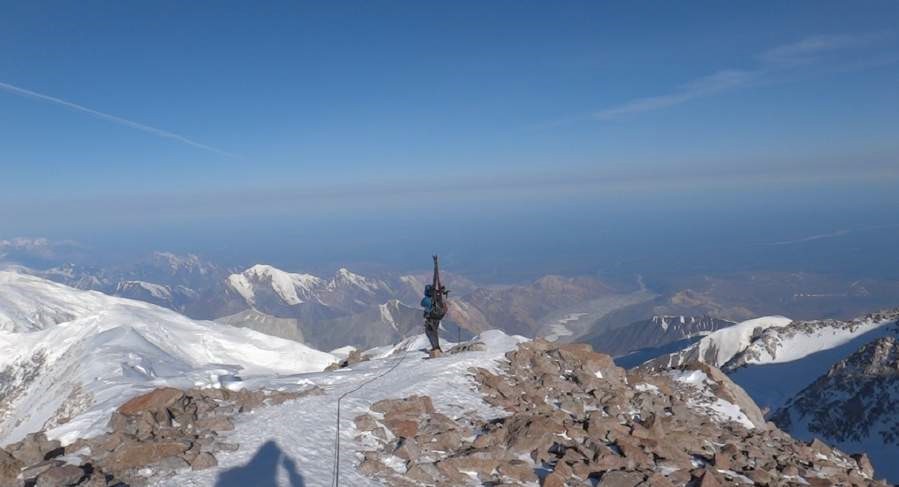
Alex Calder ’15 traversing the ridge between 16,200 and 17,200 feet.
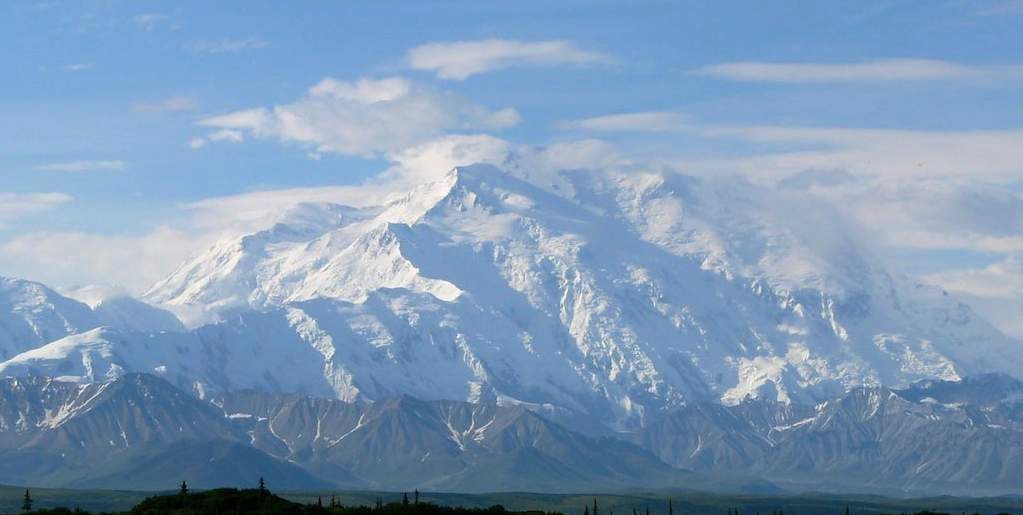
Denali as seen from Wonder Lake

 UPTON DAILY