

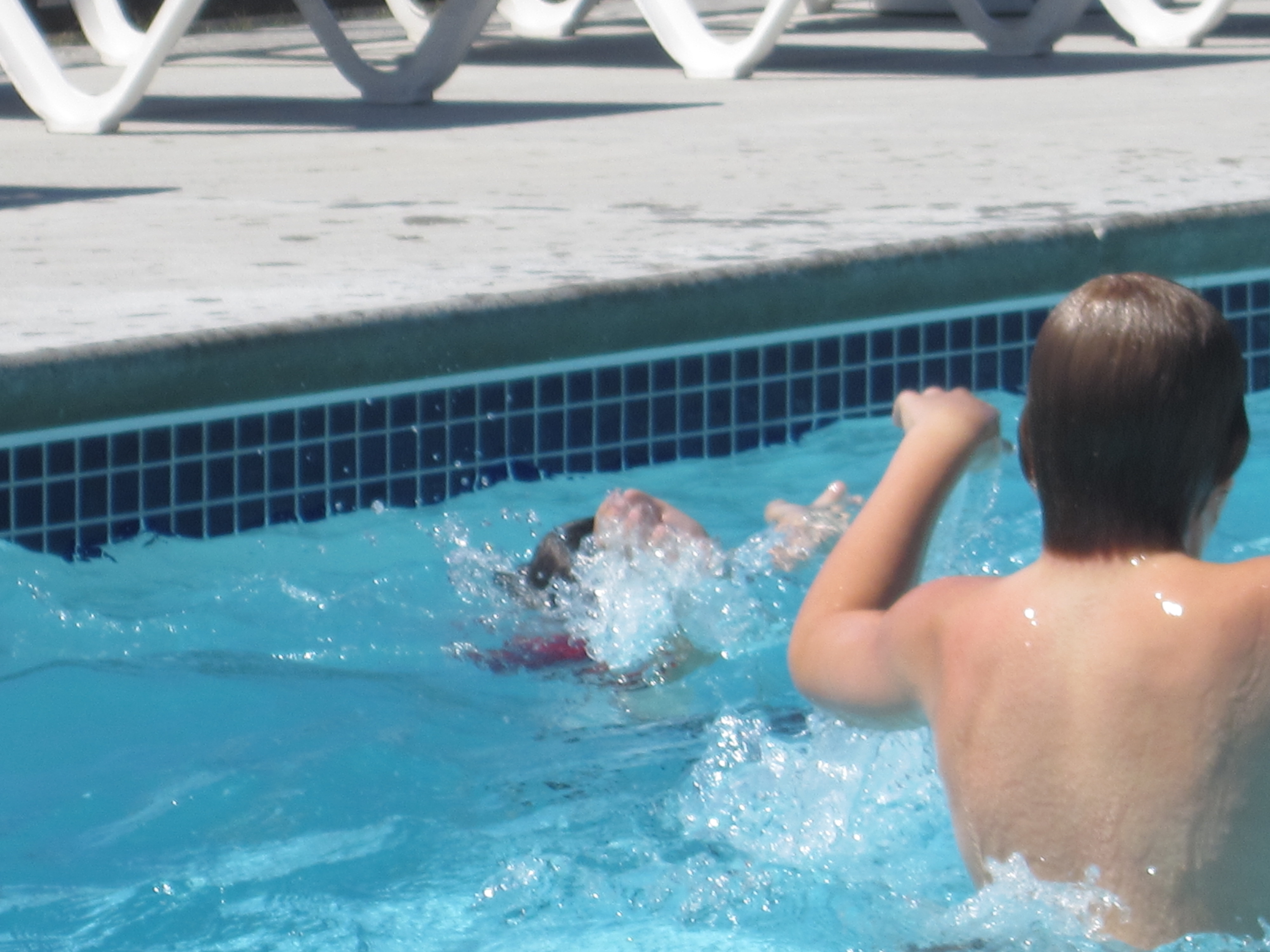
 “She’s drowning,” my friend yelled as she jumped in her backyard pool to rescue a young swimmer. There was no splashing, no one was yelling for help, other adults were in the pool but no one noticed; and this wasn’t the first time she needed to rescue a swimmer in her pool. My friend, and fellow mom, was formerly a lifeguard and was able to catch the signs of someone drowning. The swimmer’s mom was just feet away in the shallow end of the pool and didn’t notice. Why? Because drowning doesn’t look like drowning, it’s a silent killer.
According to an article written by Dr. Pia in “On Scene, the Journal of U.S. Coast Guard Search and Rescue,” Most people think a swimmer will splash, yell, and wave for help when they are drowning. This is not the case, drowning is not a violent struggle. Someone who is waving and asking for help is in aquatic distress, they realize the need help and have the mental capacity to call for help. Aquatic distress is what most of us perceive as drowning, someone who is keeping themselves above water but needs help immediately.
When someone is drowning they show signs of “Instinctive Drowning Response,” which is the swimmer’s attempt to avoid suffocating in the water. Dr. Pia states “The suffocation in water triggers a constellation of autonomic nervous system responses that result in external, unlearned, instinctive drowning movements that are easily recognizable by trained rescue crews,” or in my friends case, her years of training as a lifeguard.
Dr. Pia describes instinctive response drowning like this: (video of instinctive response drowning here)
- Except in rare circumstances, drowning people are physiologically unable to call out for help. The respiratory system was designed for breathing. Speech is the secondary or overlaid function. Breathing must be fulfilled, before speech occurs.
- Drowning people’s mouths alternately sink below and reappear above the surface of the water. The mouths of drowning people are not above the surface of the water long enough for them to exhale, inhale, and call out for help. When the drowning people’s mouths are above the surface, they exhale and inhale quickly as their mouths start to sink below the surface of the water.
- Drowning people cannot wave for help. Nature instinctively forces them to extend their arms laterally and press down on the water’s surface. Pressing down on the surface of the water, permits drowning people to leverage their bodies so they can lift their mouths out of the water to breathe.
- Throughout the Instinctive Drowning Response, drowning people cannot voluntarily control their arm movements. Physiologically, drowning people who are struggling on the surface of the water cannot stop drowning and perform voluntary movements such as waving for help, moving toward a rescuer, or reaching out for a piece of rescue equipment.
- From beginning to end of the Instinctive Drowning Response people’s bodies remain upright in the water, with no evidence of a supporting kick. Unless rescued by a trained lifeguard, these drowning people can only struggle on the surface of the water from 20 to 60 seconds before submersion occurs.
Source: On Scene Magazine: Fall 2006
As swimming season comes upon us, keep a close eye on the pool and watch of for these signs. Remember when children are swimming, they are noisy, if they are quiet find out why.
- Head low in the water, mouth at water level
- Mouth sinking below water level and barely has time to breath
- Head tilted back with mouth open
- Eyes glass and empty, unable to focus
- Hair over forehead or eyes
- Not using legs – vertical
- Hyperventilating or gasping
- Trying to swim in a particular direction but not making headway
- Trying to roll over on the back
- Swimming like climbing a ladder but can’t keep head above water


Thank you, Jen. I’ve learned something.
Thank you for posting this. I had read a similar article earlier, but was glad to re-read this and was able to pass this along to others. It’s a very scary thought. Any information we can learn to save someone is always appreciated. I, for one was unaware of the true signs of drowning. I hope I never encounter them, but I am now fully aware of what to watch out for when at the pool or beach with my kids and others. Thank you!
I have to say when I read Dr. Pia’s report, which my friend had posted on facebook, I immediately remembered a few close calls at my friends house. One more thing to watch out for is delayed drowning, which is when a swimmer takes water in to the lungs and the drowns on land up to 24 hours later, here is an article http://www.rd.com/recommends/summer-safety-alert-have-you-heard-of-delayed-drowning/.
Great article Jen! Very informative. drowning is the second highest killer for kids.